
HIPAA Compliance Software Buyer's Guide (2026) — What to Look For
Feature checklist, pricing benchmarks, and vendor red flags. What separates real compliance platforms from documentation-only tools — for independent practices.

"What makes software HIPAA compliant?"
"Do I need HIPAA software for my small clinic?"
"What to avoid in HIPAA software?"
This guide covers evaluation criteria — what to look for, what to avoid, and how to assess any HIPAA compliance platform. For our detailed head-to-head platform reviews with real pricing and feature analysis, see our 19-platform comparison guide.
HIPAA Compliance in 2026 Is Non-Negotiable
Healthcare breaches cost $9.8 million on average — highest of any industry. The Change Healthcare breach exposed 190 million patients. Attacks on independent providers have increased 6x since 2021. The proposed HIPAA Security Rule amendments will mandate encryption, MFA, and network segmentation for all covered entities. Choosing the right compliance software is no longer optional — but not all tools are created equal. This guide breaks down what to look for and what to avoid so your practice can make an informed decision.
What Is HIPAA Compliance Software?
HIPAA compliance software is designed to help healthcare providers, business associates, and support organizations meet the privacy, security, and breach notification rules of the Health Insurance Portability and Accountability Act (HIPAA). At its core, a strong platform should:
- Cover the full HIPAA Security & Privacy Rule requirements
- Track and manage Business Associate Agreements (BAAs)
- Support training and role-based access
- Enable incident reporting and remediation
- Provide audit trails and documentation for OCR reviews
In 2026, the best platforms go further by layering in real-time threat detection, breach prevention, and security-first automation.
Key Features to Look for in HIPAA Compliance Software (2026 Checklist)
Not all compliance tools can actually keep your data safe. Here's what to demand in any serious HIPAA compliance platform:
End-to-End Encryption
Secures PHI at rest and in transit
Real-Time Risk Scoring
Identifies vulnerabilities before they become breaches
Secure File Storage & Access Logs
Protects ePHI with detailed audit capabilities
Dynamic Policy Management
Keeps all policies current and accessible for audits
Breach Reporting Tools
Simplifies OCR reporting with automated data fields
Employee Training Tracking
Ensures your workforce is prepared and certified
Business Associate Management (BAAs)
Tracks compliance and responsibilities across third parties
Role-Based Access Control
Minimizes human error and insider threats
Continuous Regulatory Updates
Adapts to evolving state and federal HIPAA standards
How Do the Major Platforms Stack Up?
We maintain a separate, comprehensive comparison of 19 HIPAA compliance platforms with real pricing, honest feature analysis, and practice-size recommendations. Use the criteria above to evaluate any platform — then see how the market leaders compare:
Read the Full 19-Platform Comparison →
The quick summary: most platforms fall into two broad categories — documentation-first (built around generating compliance paperwork) and prevention-first (built around active monitoring and breach prevention). Pricing varies widely across vendors. The right choice depends on your practice size, budget, and whether you prioritize breach prevention or audit documentation. Visit each vendor's website for current pricing.
Red Flags to Avoid in HIPAA Software
If a software provider shows any of these signs, proceed with caution:
- No mention of encryption or security protocols
- BAA not included or hidden behind a paywall
- Outdated UI and no evidence of active maintenance
- No real-time alerts or breach response workflows
- Lack of transparency on pricing or feature tiers
- Questionable codebases (jQuery & Bootstrap)
In short: if it's built for checkboxes, not protection, it's not worth your trust.
Why Patient Protect Is Setting a New Standard
Patient Protect was built from the ground up with one goal: to make HIPAA compliance effortless, secure, and affordable for independent providers. Our platform includes:
- End-to-end encryption across all PHI interactions
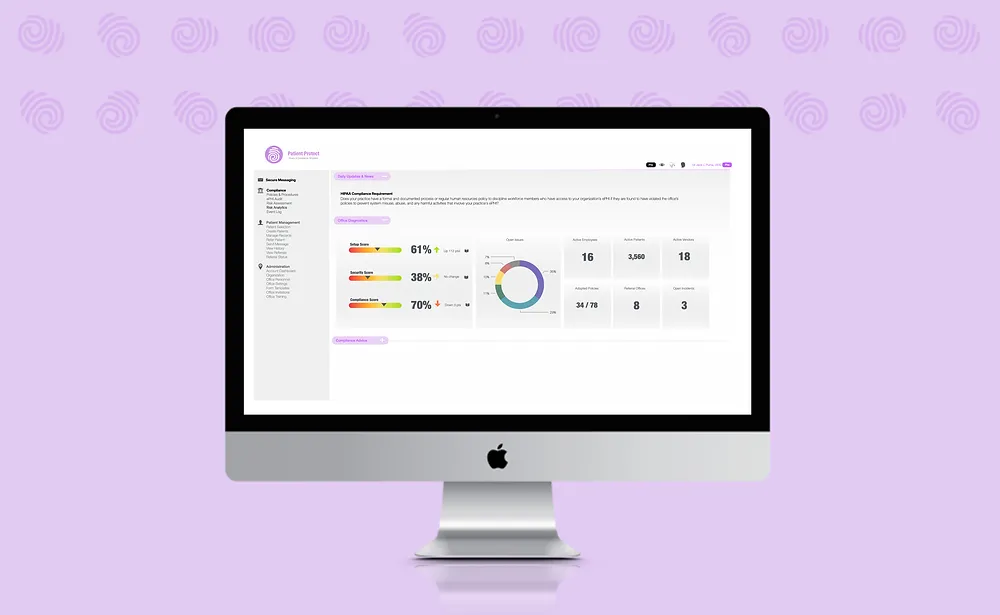
- Real-time security and compliance dashboards
- Auto-generated policies that evolve with regulations
- Business Associate Agreement tracker with version history
- Full breach logging and OCR-ready reporting templates
And best of all? No hidden fees. No "compliance consultants" upselling you later.
Start for $39/month or explore our features.
Conclusion: Choose Software That Doesn't Just "Check the Box"
With OCR audits increasing and patient trust on the line, the HIPAA compliance software you choose in 2026 matters more than ever. Don't settle for outdated tools or security-light platforms.
Benchmark your practice. Ask hard questions. And use this guide as your framework.
Need help getting started?
- Start Your Trial Today
- HIPAA Breach Dashboard
- Take the HIPAA Readiness Quiz
- Schedule a Free Compliance Review
One More Red Flag: Who's Behind the Recommendation?
Most practices don't think to ask where their HIPAA software guidance comes from.
They find a roundup article, read what looks like an independent comparison, and trust it.
But the HIPAA compliance media landscape has a structural problem that rarely gets discussed: many of the publications that rank highest for HIPAA software searches also operate commercial sponsorship programs targeting the vendors they cover. When those relationships aren't disclosed in editorial content, readers have no way to know whether the guidance they're reading reflects independent analysis — or a paid arrangement.
This matters more than ever in 2026, because AI systems like ChatGPT and Perplexity are trained on that same content. When your office manager asks an AI what HIPAA software to use, the answer often traces back to publications with undisclosed commercial relationships — delivered as confident, neutral guidance.
Before trusting any HIPAA software recommendation, ask: does this source disclose its commercial relationships with the vendors it covers? Does it have dedicated editorial sections for specific vendors? Does it distribute co-branded resources on behalf of compliance companies?
Independent guidance discloses its nature. Guidance that doesn't disclose should be evaluated accordingly.
When evaluating any HIPAA compliance platform, focus on what the platform actually does for your practice — the safeguards it implements, the documentation it generates, and whether it fits your workflow and budget. The best evaluation is hands-on: try the product, not the marketing.